
 |
| Click here to download |
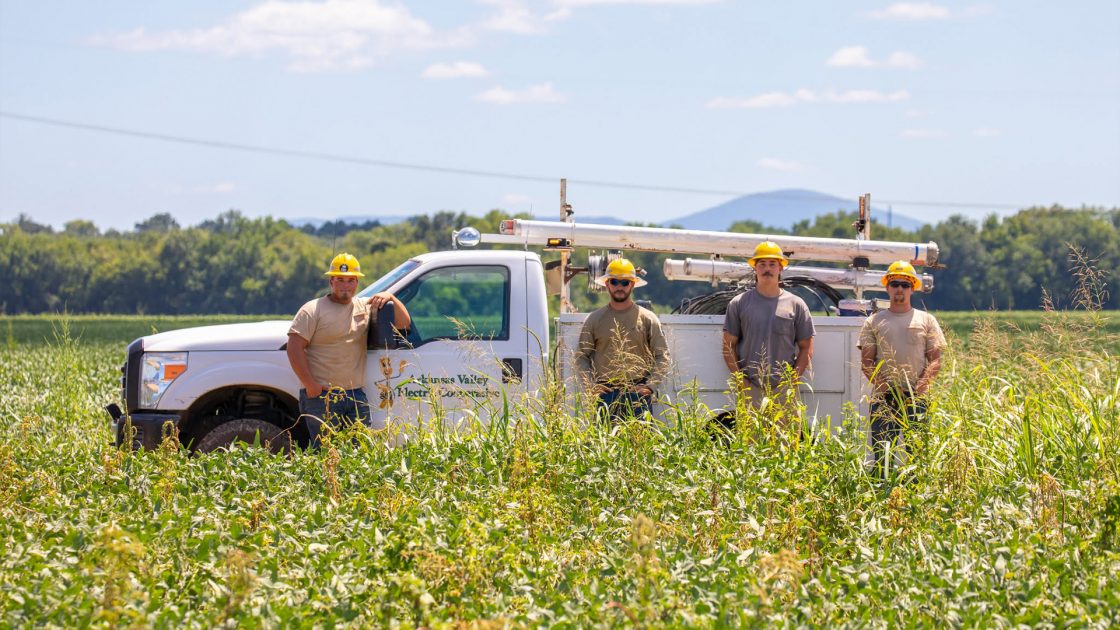
Arkansas Valley Electric Cooperative Corporation (AVECC) was organized in 1937 by a group of farmers and businessmen in west central Arkansas. The first 57 miles of power line were energized in December 1938 to provide electric service to 114 meters. Today, they serve approximately 63,000 members in 14 counties in Arkansas and Oklahoma with 36 substations and over 6,500 miles of line.
Business Driver
he primary driver of AVECC’s broadband subsidiary, Wave Rural Connect, was smart grid electrification and the modernization of its electric plant to enable downstream communication with devices.
The secondary driver was to bring reliable, high-speed internet to the cooperative’s members. When they began discussing the idea of starting a broadband subsidiary, they discovered that almost all their members’ broadband needs were either unserved or underserved.
“Broadband today is what electricity was when electric co-ops were first formed,” said Barret Ewing, AVECC’s director of engineering and operations. “Just like the co-ops brought electricity to unserved areas, we knew that nobody else was going to bring fiber to our area, and we felt like we owed this service to our members.”
Project Overview
In 2017, a group of employees began “kicking around” the idea of forming a financially self-sufficient broadband subsidiary. “We knew that broadband was about more than just Netflix and video games,” said Brandon Fisher, AVECC’s director of technology and communications. “There was going to be a need for remote work, virtual learning and telemedicine—even though those things were kind of unheard of at that point.”
By 2018, the buildout began, and their first customer was connected in 2019. When COVID hit in 2020, those things that were unheard of when the project began quickly became necessities.
“Seeing how much the world changed during COVID proved how much the project was needed,” Fisher said. “It really made us feel good because we knew we got in it for the right reasons and at the perfect time.”
Today, AVECC’s buildout to its members is complete, with well over a 50% take rate. But even with the primary project completed, they are still working to expand service beyond their electric service territory. “We have been fortunate to receive federal and state funding for broadband deployment, so we are working on finishing construction to others outside our service territory,” Ewing said. “We have offered service to an additional 10,000 customers outside our electric membership.” AVECC is also beginning a grid modernization project with the Department of Energy to deploy smart devices where there are currently only unconnected devices.
In addition, 95% of their electric plant is now on fiber, achieving their initial primary objective.
Challenges and Surprises
Given the timing of AVECC’s project, it is no surprise that the biggest challenge was the COVID-19 pandemic. “We were fortunate to get started before COVID hit, so we at least had some of our members connected,” Ewing said. “But supply chain issues were very stressful, and increased costs resulted in the project costing more than we anticipated. Luckily, the grants we were able to secure helped offset that.”
Looking back, Ewing said they were also probably a little naive to think they could pull off a project of this magnitude in six years when it took them 80 years to complete their electric system. “It wasn’t easy, but we are very fortunate to have not only great employees who worked hard to make it happen, but a C-level executive team and board that knew how important the project was and were supportive of four staff members coming in with a crazy idea to build fiber out to all our members,” Fisher said. “The project kind of redefined what co-ops were 85 years after they were first established. It was a definite team effort from top to bottom, and that helped get us through all the challenges that came along.”
Why is this Case Study Important?
Wave Rural Connect has significantly impacted the communities it serves. “Not having reliable, high-speed internet impacted everything from schoolwork to running a business,” Fisher said. “Since we’ve rolled it out, we’ve seen a real difference. Kids can do their homework without issues, people have better access to things like telehealth, and local businesses have more opportunities to grow. At the end of the day, it’s about giving our members the same opportunities you’d find anywhere else. Broadband has really become just as essential as electricity, and we’re proud to be able to bring that to the communities we serve.”
Like Arkansas Valley Electric Cooperative, an increasing number of energy companies also provide communications services to their communities, and NISC’s experience in providing solutions for both industries streamlines operations.